From images that look as if they’ve been printed using a printer in an office to lettersets that can be mixed and matched, as well as trinket collections cut out in this article, we’ll highlight five recent fashion trends we’ve been following.
There’s a reason that older iPod Shuffle prices have been rising on eBay in the past year: they’re something that appears to be an extremely distant symbol of simplicity today. It’s a natural process that sees Gen Z becoming nostalgic for the cultural landmarks of their childhood, or a sign we’re all drained of technology and seeking something completely distinct to consume. The exact motivation behind the revival of technology in the early 2000s was evident very clearly in our design work as of 2025.
Strategies to counteract the growing stress from the current digital design processes continue to develop a multi-layered, imperfect, and unintentionally analog approach to work in the last year, a sign of all the ways we may be fighting back against the rapid-paced technology. We’re coming to realize that the work of design can’t be detached from the hands that create it. That’s why people are turning to collecting, scanning, scrapbooking, and collaging to make things feel uneven, even when polish is making work feel flat.
At the beginning of 2025, we discussed the concept of the anti-trend. This stock-take of 2026 examines five distinct waves that appear to be growing within the same space. However, we’ve focused on the details of formal design a little more in the past year. In examining five major areas that pop up in many different practices of Graphic Design today, including typography, logo design, printing and editorial design, as well as the production of images, we’ve witnessed methods that highlight this growing trend towards a more multi-media approach.
In reality, our results were quite common this time around; the content that has been shared through our platforms and into our Instagram saved folders was diverse in its concept, topic, as well as purpose. When we’re putting together our personal collection of trends that you may want to save for the coming year, we’re also highlighting a common idea or method that’s been embraced with enthusiasm. There are many interesting ideas. It’s not a definitive prediction of what’s coming; rather, this summary of our year-long research from Insights to Forward-thinking is an analysis of how creative people are responding visually to the present times and some of the most interesting ideas that have landed on our website.
In Print: Send me one.
Errors, such as a soft layer of grain with low resolution or the dazzling appearance of particles stuck to the glass plate, are distinctive embellishments that come as complementary enhancements to your photos when you print with an Xerox printer. These peculiarities have created quite a design fad towards the end of 2025.
That has ties to punk grunge and independent publishing; the home printer is largely forgotten because techniques such as Risograph have become the dominant print method over the past decade, bringing us something raw and unpretentiously low-fi with full color. However, we’ve seen a gradual but steady return to tripped-down greyscale pages that have adopted the unpolished aspects of this printing technique to make a statement of fashion: rough and gritty looks that have come back.
What we’re calling the *warning low ink* look was a defining feature of type designer Charlotte Rohde’s launch of Oficia Mono last year, showcased in an office-photocopier-style campaign for the typeface. It’s also been the basis for a variety of branding identities – Louis Garella’s logo for the electronic group Sonata Electronica, being one of the most notable. Ink coverage was low, making the new logo of the designer appear as if it was changing or disappearing (or dancing) as the color faded.
The visible imperfections that appear scrappy on the scanner bed were used to create the branding of How&How’s Big Cartel, with a printed A4 that is scrunched, a nod to the platform’s distinct DIY roots. The soft, flattened appearance has even seen the photographers scanning prints back to create the nostalgic feel of the 1980s magazines, which everyone seems to be striving towards at the moment. Imagine this trend as the equivalent of the return of Y2K-style digital cameras for photography.
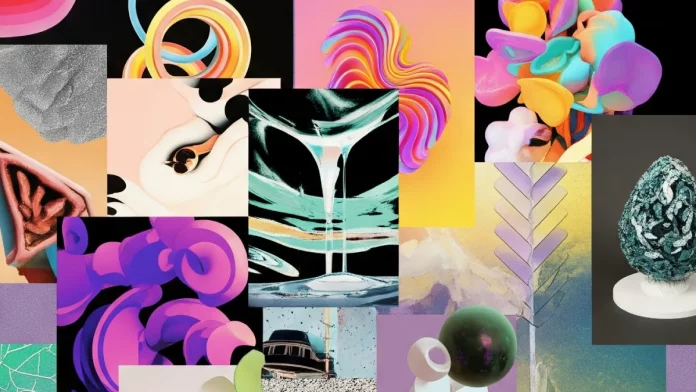
Since current AI image generators struggle to replicate the subtleties of a multi-layered mixed-media style, we believe that scanning, overworking, or a heavily textured approach to making images will only increase by 2026. The collages of artists such as Alice Isaac and Andrzej G are a great illustration of this type of dense visual stacking, where the compositions begin with cut-outs and scans, but then evolve into something more exciting digitally. Animations like Tala Schlossberg’s create the texture packs that designers use to create appear outdated, and scanning itself is evolving into something more experimental, and designers, such as Jacob Hutch, are taking things outside using this handheld device to capture what a boring office photocopier would only imagine seeing.
In Assets, the visual index
In the past, we noticed an increase in the display of resources that we named “The Library” – motion design that rotated images that we could view like a deck of playing cards. Now they’re presented in a single nice collection.
The act of collecting has evolved into something of a visual form in and of itself. And as 2025 drew to an end as we watched increasing numbers of designers collect their materials in cut-and-paste inventory with a variety of shapes and forms similar to ornaments that one could keep hanging on a wall case. The idea of inventory has been an emerging style of visual art prior to, however, this time the items appear more scientific, such as entomology display cases featuring pinned-down butterflies and bugs.
Flattened, numbered, and rolled out without any perception of scale or proportion. The cut-outs are collaged and obliterated from the surroundings in Sunroom’s snail mail or Miguel Vides posters alike. The method brings together the various typologies found in Consuegra’s work, as well as an assortment of cranes, for instance. It’s unclear which is more exciting about these artworks: gathering or creating.
There is a nefarious feeling that Gen Z’s adoration for “cute little things” (the trinket revival) has created this desire to order and organize items similar to the sheets of stickers we kept in our childhood. This could be the reason an edgier, more illustrated version of the fashion created Wonderhood’s brand identity for Parish Primary School so beautifully. The inherent nostalgia that this visual arrangement evokes was also a key element of the From Form 2025 Museum Night identity, harking back to the beginning of 2000 by referencing the collection of unique items from the past, such as football cards, tamagochis, and keyrings.
If they are photographic assets with detailed details or angular cut-outs that are more detailed, these tiny archives of objects can be colorful as well as nostalgic and fun or more utilitarian and didactic such as the spreads in graphic art artist Hyejin Song’s book on sushi tools, where items are laid out on pages like a table of kitchen tools to prepare for the cooking class you’re about to start.
Being able to see everything at once is the perfect way to follow instructions, but this trend isn’t only about function but also the pleasure of ownership and curation. It’s also a great framing device for our visually hoarding, which we’re hoping to see increase in the coming years when an obsession with collecting continues.
In layout: Micrographics
The text on labels or on the tiny copies of food packaging has always been a background texture that is easy to overlook. The truth is, these labels do not look stylish and are functional over form. And they “were never meant to look good,” according to creator Brandon Wang. We’ve also seen what Brandon describes as “the aesthetics of technical information” being seen often in the graphic design landscape lately. Also known as micrographic, the visual language is becoming more of a central part of the design of furniture.
Chemistry diagrams have appeared in billboard ads by UncommoPackaging. It is printed with a minimal amount of metrics, and a few of the most renowned brands of sportswear are treating technological data as texture. Similar to industrial diagrams, blueprints, or data, these tiny layouts are filled with typography and symbols that could be seen on the back of tech products. However, unlike the stamps hidden within the fabric of our ordinary everyday lives, the designers have brought these tiny details and textures into the spotlight.
Astrae Studio is big on the grids and symbols that compose the page furniture. This is a strategy that has helped shape campaigns for brands like Nike, as well as its own branding that is a part of Astrae Sports, the studio’s brand-new line of sportswear. A focus on everyday micrographics that we could overlook is also brought into focus within Zak Jensen’s work. The art director focuses on the smallest details, such as the fonts that are printed on your sandwich clip, and turns it into the focus of the event.
We believe this secret language of hyper functionality could be the beginning of something in 2026. not only as a graphic component but as a general underlying theme within graphic design. Expertise-based work is increasing, and our associated visual systems are getting more complicated. Many branding projects consist of contract layouts as proof of identity-related work.
Designers are embracing these tight patterns, typographic overlays, and time stamps as visual elements that indicate technical depth and specific knowledge of projects. This is the reason we’ve seen this style occur in sports so frequently. There’s often more of an obvious, practical benefit of working with more technological materials in our designs, however. We’ve all made the mistake of adding an extra line of text to a design to make it more balanced.d However, just like any other thing, when extra details are included to add value, these aren’t working in their optimal way. These little Easter eggs may make us feel like looking at them more and more; we discover, as the amusement of tiny doodles originally engraved into circuit boards.
In Logos: Blotch
We’ve noticed a change in logos lately, which is making them appear a little similar to King & Partners’ slightly melt-looking logo for Skims that has remained in place since the year 2019. There’s really no other way to describe how logos appear more messy, but not necessarily in a negative way.
Contrary to the solid, shiny, gilded appearance of monk-approved logos that we saved in the past, we’ve seen an increase in the use of more flexible and fluid logos. It’s been seen in a variety of instances across categories of brands. In projects like Angelina Pischikova’s or Karina Zhukovskaya’s award-winning branding for Mud – a brand for dog washing that required making an even bigger mess than the typical sans serif-type logo – or Cash and Carry’s animation logo for the wine brand Other, that resulted in the creation of a logo that is fluid enough to drink.
One style being played with is forms that feel as if they’ve been drawn with markers that leak,l lurry, uninformed, and unstable. The idea was evident during Clemens Piontek’s and Clio Hadjigeorgiou’s identities in the Swiss Art Awards last year, when they rearranged blotches from type into shapes that looked like abstract paintings.
Although Barkas did not use the letterforms used in its illustrated branding mark to represent Common Goal, its two running figures are both sporting an organic outline. Although they don’t need to be a mess of all directions, some logos are more specific in their softness. For instance, Caramba Agency’s new logo for Wolke is based on the design where things begin to melt. Or the brand identity of the 2025 International Poster Competition, which did not focus on legibility, but was distinctly electronic.
There’s something incredibly useful about these fluid designs in a world where motion is everywhere in an image of a brand. They appear as if they’re already moving. No matter what it is, whether it’s bubbles soaring in water or butter melting off a stack of pancakes, we want to see them move to expand, shrink, or shift. Consider Monotype’s “shape-shifter” logotype for lingerie brand Chantelle Pulp, for example, the letterforms stretch delicately into “celebrate all shapes and sizes”. We expect to see more organic shapes appearing in the digital world this year, as the demand for “shape-shifter” logos continues.
In Typography: Pick and Mix
A letter set is typically defined by a broad set of rules to guarantee a degree of uniformity across its characters. Of course, you can opt not to adhere to these rules, but we’re seeing an increasing sense that designers aren’t as inclined to do so. Designer from Berlin, Jasmina Begovic, book Font Feelings recently questioned: What is a font like when it’s able to be whatever it likes? When legibility goes out the window, and expression comes first. A more collage method of using typography becomes possible. We’ve seen letters that have a more collaged feeling of ransom notes.
There were a number of ingenious and atypical lettering styles that were exhibited in prints at the International Poster Competition at the close of the year, like the poster of Eva Rotreklova for Vernissage Fanzines Festival or Juliette Dupont Duchesne’s poster of Nouveau Poem. The majority of these lean to the inherent mistakes and variations that are inherent in hand-drawn, however, this style of writing isn’t confined to free lines. The letterforms are being found in unconventional ways, such as from scavenged materials, hand-crafted, or even scavenged. Take Design Office Fun’s branding identity for Trobar as an example. The font used in the logo of the place was made by combining recycled letters from used bookshops, stationery stores, which were arranged to make quite an odd collection.
Performer Harriet Richardson recently collaborated with F37 Foundry in this spirit to create a typeface using her personal handwriting. It’s a mix of confessional writings culled from her own journals from thirteen to thirty, and glyphs that are derived from scribblings strewn across the pages. You can be sure that anything with the perfect X height could not have contributed to the humour or story of a piece such as this. Each letter needed to be different and unique.
Another way to create typefaces has resulted in the past, like designers Varada Rege’s Tapeface, which rewrites the tradition of typography by introducing the unruly lines of tape, or Los Crises Slide Tackle Font, comprised of the tracks that were left on an FIFA field by players who have the worst record of fouls. Some don’t enjoy this type of experimental disorder or think that it’s not functioning properly if it’s not clear enough to be read; however, these fonts put design over function at all costs. We’re eager to see how unsteady and ill-matched ways letters take place in 2026, whether they are legible or not.